
Harvesting Hope from Our School Garden: Apitimiss Asima
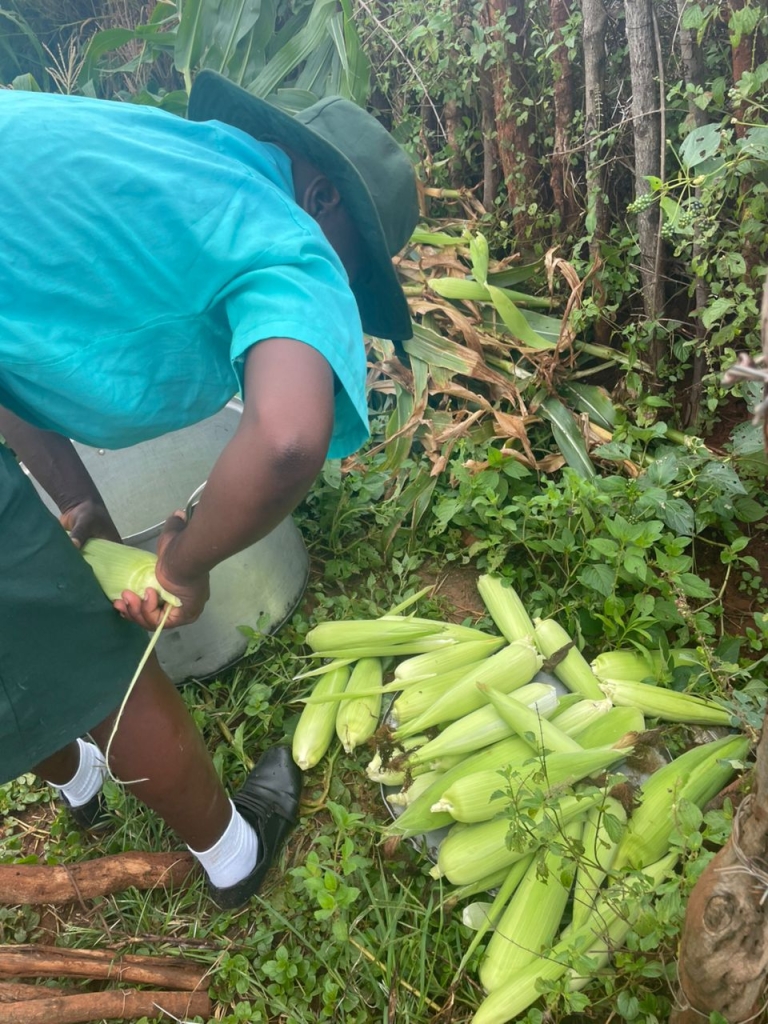
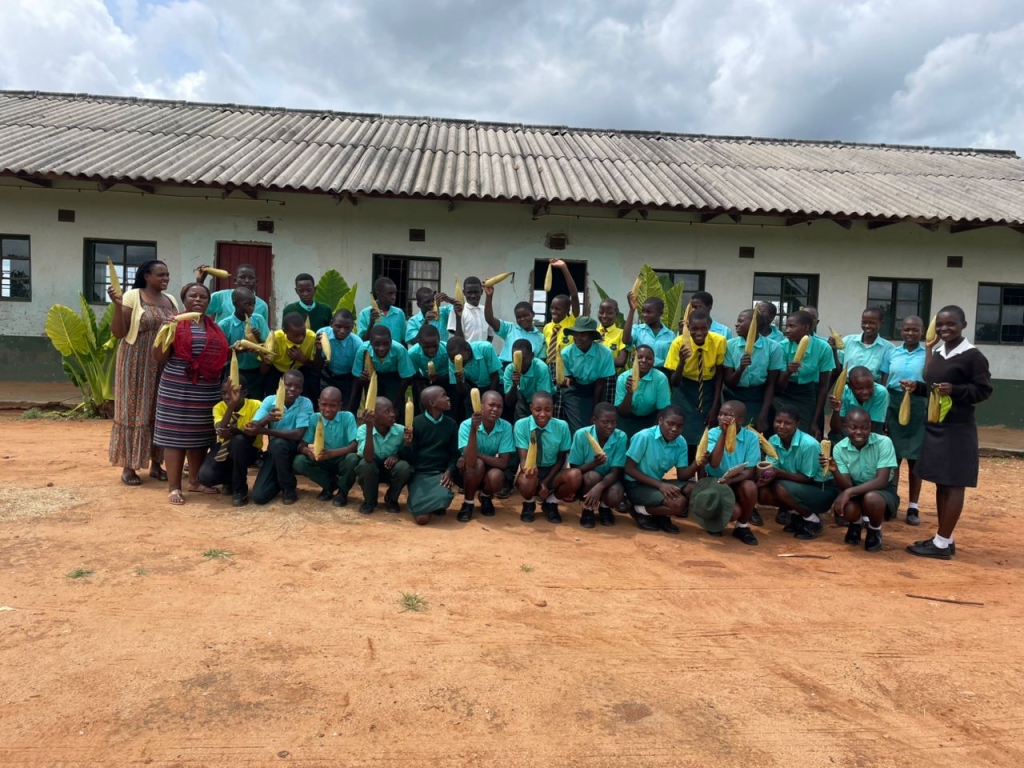
Today, learners at Bwanya Secondary School harvested green maize from our school garden. What began as a practical Agriculture lesson has grown into something far more meaningful — a source of nourishment, hands-on learning, and renewed motivation for our students.
As the Agriculture teacher at the school, I am committed to transforming the garden into a living classroom — a dynamic space where theory meets practice. Here, learners gain hands-on experience in climate-smart farming techniques while directly contributing to their own well-being.
The garden is no longer just a plot of land; it is an active learning environment where students apply classroom knowledge in real, tangible ways.
Through practical agricultural activities, learners are not only studying sustainable food production in theory, but actively engaging in it. They prepare the soil, plant the seeds, manage weeds, monitor crop growth, and ultimately harvest what they have nurtured. This process strengthens their understanding of agriculture, food systems, and environmental responsibility. At the same time, it improves their nutrition at school, as the produce supplements their meals.
This initiative demonstrates the powerful role school-based agriculture can play in supporting both education and food security. By integrating food production into the school environment, we are helping to ensure that no learner studies on an empty stomach. Access to nutritious food enhances concentration, supports physical development, and contributes to overall well-being.
Furthermore, the programme promotes consistent school attendance. Learners are more motivated to come to school knowing that they will receive not only knowledge, but also nourishment. When students feel cared for and supported, their sense of belonging and commitment to their education increases.
When learners are well-fed, they are more attentive, more engaged in class, and more likely to remain in school. This strengthens academic performance and contributes to improved long-term educational outcomes.
What we witnessed today was more than a harvest of green maize. It was a harvest of skills, confidence, responsibility, and hope. It is a reminder that some of the most powerful lessons do not begin in textbooks — they begin in the soil, in shared effort, and in the belief that education can nurture both minds and bodies.
-Apitimiss Asima: 6th Cohort Fellow
Add Comment