
From Rural Voices to Systems Change: Young People Shaping Zimbabwe’s Education Future
For rural young people, conversations about Zimbabwe’s education system are not abstract policy discussions. They are conversations rooted in the schools they attend, the communities they come from and the challenges they see every day. They are also conversations about what becomes possible when young people are given the opportunity to understand the systems around them, gather evidence and contribute meaningfully to the decisions that shape their education systems.
On 20 August 2026, those experiences and perspectives took centre stage in Harare as Teach For Zimbabwe (TFZ), through the Kuyenda Collective, convened an Education Systems Mapping Workshop under the theme “Knowledge for the Future.” The workshop brought together Rural Youth Champions (RYCs) from Binga, Chiredzi and Mutoko alongside representatives from the Ministry of Primary and Secondary Education (MoPSE), Parliament of Zimbabwe, specifically members of the Parliamentary Portfolio Committee on primary and secondary education , Ministry of Labour and Social Welfare , civic society and other education stakeholders.
The gathering marked an important milestone in a journey that has progressively moved from community evidence to district engagement, national dialogue and wider regional and international education spaces. Rather than simply presenting research, the workshop demonstrated how evidence generated by rural young people can travel through different levels of the education system and contribute to conversations about policy, financing, accountability and resource allocation.
From lived experience to evidence
The Kuyenda Collective is a transnational initiative working across Zimbabwe, Malawi, Mozambique and Tanzania under the Education Out Loud programme, supported by the Global Partnership for Education and managed by Oxfam IBIS. Its work seeks to strengthen the ability of rural youth collectives to participate meaningfully in education systems and decision-making while contributing to improved access, quality, relevance and equity in education. Through the initiative, Rural Youth Champions have been equipped with skills in advocacy, systems thinking, evidence gathering and social accountability. This has enabled them to move beyond identifying challenges in their communities to examining how those challenges connect to wider education systems and engaging the institutions responsible for addressing them.
In Zimbabwe, this process has generated a growing body of evidence. Between 2024 and 2026, the RYCs collected data from 163 schools across Binga, Chiredzi and Mutoko: 22 schools in 2024, 74 in 2025 and 67 in 2026. The successive rounds of monitoring have helped build evidence around issues including education financing, infrastructure and basic services, gender equity and retention, Education Management Information Systems (EMIS) and civic governance. The value of this work extends beyond the number of schools monitored. It gives rural communities an opportunity to contribute knowledge about the education system and provides young people with evidence they can take into spaces where decisions about that system are made.
From district systems mapping to national dialogue
The 2026 workshop also built on an important milestone from the previous year. In 2025, a systems mapping engagement brought together district-level stakeholders, including MOPSE District Officers, District Development Coordinators, Min of Labour and Social Development district officers, Ministry of Youth, Ministry of Women Affairs and Gender Empowerment, Churches and religious leaders, Local Government and Local leadership like Chiefs and representatives of the Zimbabwe Republic Police, creating space for Rural Youth Champions to engage actors working within local governance and education systems.
This year’s engagement took that process to another level. By bringing the RYCs into direct dialogue with MoPSE officials at National/HeadOffice, Members of Parliament and national civic society stakeholders, the conversation moved from the district to the national level.
That progression matters because the challenges identified by young people may be experienced locally, but they often raise much broader questions. A school struggling with teacher shortages, a learner travelling long distances to access education, inadequate infrastructure or barriers affecting girls and learners with disabilities can all point to questions about how education systems plan, finance, allocate resources and respond to different forms of need.
The workshop therefore created an opportunity to look beyond individual cases and consider what the evidence reveals about the wider system.
Seeing the system through rural experiences
Across Zimbabwe, learners do not experience education in the same way. Where a child lives can influence the distance they travel to school, the availability of teachers and learning materials, the quality of infrastructure, access to digital technologies and the support available to learners facing additional barriers. These disparities are particularly important when considering the rural-urban divide. Education-sector analysis in Zimbabwe has highlighted persistent differences in access to resources and services between rural and urban communities, while long distances to schools, infrastructure challenges and teacher shortages continue to affect learners in many rural areas. While the evidence collected by the RYCs was targeted , it gives these broader challenges a system dimension. A learner living with albinism who faces difficulties accessing school, girls affected by period poverty, young people whose education has been interrupted by pregnancy or economic circumstances, and schools struggling with staffing may appear to represent separate issues.
Together, however, they point to the need for education systems that can identify different forms of disadvantage and respond to them equitably. This is where systems thinking becomes important. The question is not only whether a child is enrolled in school, but whether the system has the information, resources and mechanisms necessary to ensure that the learners can participate, learn and thrive.
Why EMIS and financing matter
One of the central issues discussed during the workshop was the use of Education Management Information Systems in planning and resource allocation. For the RYCs, this is not simply a technical question about data. It is about whether education systems have reliable information to understand where needs are greatest and how resources can be distributed more equitably. A functional EMIS can help identify where teachers are needed, which schools require additional learning materials, where infrastructure gaps exist and which communities may require greater investment. The Kuyenda Collective has therefore called for countries to have digital EMIS that are adequately supported through legislation and resources and made publicly accessible.
Responding to the issue, Dr Patrick Ngandini, Senior government official in Zimbabwe serving as the Director for Secondary Education in the Ministry of Primary and Secondary Education, emphasised the practical importance of education data, noting:
“A functional EMIS is the backbone of planning. It tells us where teachers are needed, where textbooks must go, and which schools are lacking.”
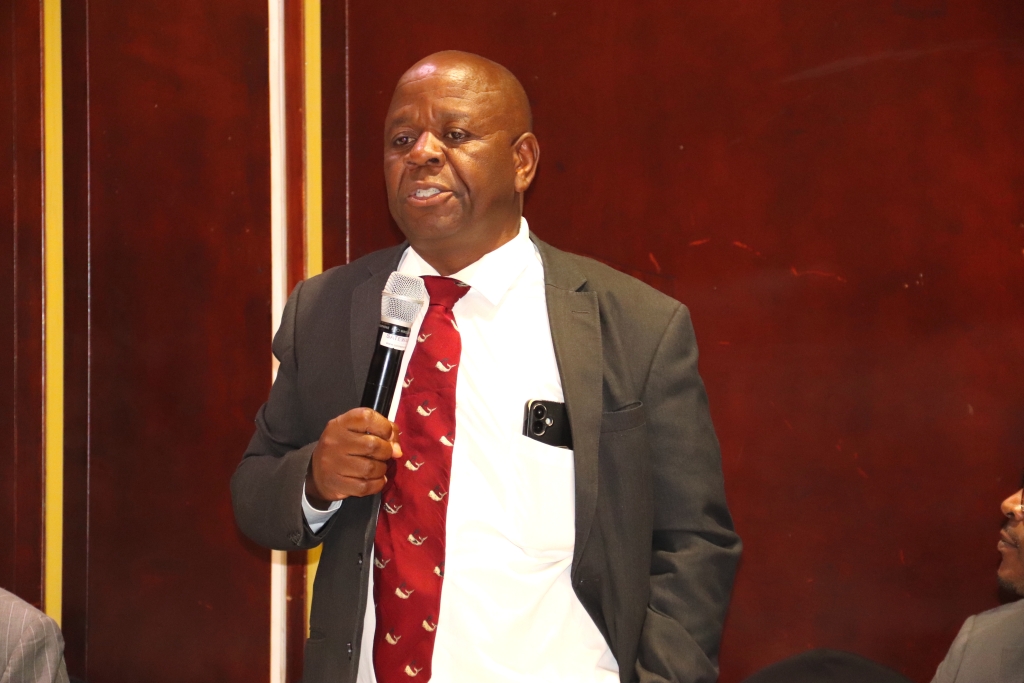
The Ministry also indicated that it is working with partners to strengthen EMIS data and that the RYCs’ call for stronger legislative support for EMIS would be taken to relevant policy forums. The discussion also highlighted the importance of education financing. The Collective has called for stronger commitment to domestic investment in education, including its collective advocacy position that the Government should commit at least 20% of national budgets to education. Together, financing and effective information systems are central to ensuring that resources are not only available, but reach the communities and learners who need them most.
When evidence contributes to action
The RYCs’ experience demonstrates that systems advocacy can also lead to practical change when community evidence reaches responsive institutions. At Matedza Secondary School in rural Mutoko for example, Rural Youth Champions identified severe teacher shortages, low enrolment and high dropout rates among girls and vulnerable learners. The school’s situation was subsequently raised through an Education Coalition of Zimbabwe engagement with the Minister of Primary and Secondary Education. The Ministry deployed an additional teacher, while TFZ complemented the response through the deployment of a TFZ Leadership fellow. Further partnerships helped address financial barriers facing vulnerable learners, with support through the Basic Education Assistance Module reaching 10 learners and collaboration with CAMFED supporting six teen mothers to return to school through scholarships. Matedza demonstrates how a challenge identified at community level can move through advocacy channels and attract a response from institutions and partners with the capacity to act. It also illustrates why evidence-based advocacy matters: the goal is not simply to document challenges, but to create pathways through which those challenges can be addressed.
From Zimbabwe to a wider African
The issues emerging from the RYCs’ work in Zimbabwe are also part of a wider conversation. The Kuyenda Collective operates across four countries, namely Malawi, Mozambique, Tanzania and Zimbabwe, and its work has identified common challenges affecting rural learners, including infrastructure and resource gaps, distance to schools and limited digital access. This transnational perspective allows Rural Youth Collectives to compare experiences, identify common patterns and strengthen collective advocacy. A challenge that appears local can become part of a much broader systems question when similar experiences emerge across communities and countries. Kuyenda RYCs have already taken these conversations into regional and international spaces, including the International Quality Education Conference in Dar es Salaam, SARSYC recently in Namibia, GCE platforms where young people engaged alongside educators, policymakers and civil society on issues including education financing, resilient education systems, teacher development, equity, inclusion and youth participation.
The evidence therefore does not stop at the district boundary. It can move from community monitoring into national policy discussions and then into regional and international conversations about how education systems can become more equitable and responsive. Bringing rural evidence into national accountabilityThe response from Parliament demonstrated the significance of bringing community-generated evidence into national education governance.
Representing the Chairperson of the Parliamentary Portfolio Committee on Primary and Secondary Education, Hon. Mukomberi described the engagement as a landmark moment that brought together duty bearers, policymakers, civil society and the users of the education system. He noted that the RYCs’ findings provided grassroots evidence that could strengthen parliamentary oversight and help ensure that education reforms respond to the realities of learners and communities.
“Today’s Indaba has been a landmark engagement, bringing together duty bearers, policymakers, civil society actors and the very users of the education system—the Rural Youth Champions.”
Importantly, the Committee indicated that the findings would not end with the workshop. Hon. Mukomberi said the Committee would integrate the evidence into its upcoming reports and deliberations with MoPSE, particularly around equitable financing, EMIS, infrastructure and staffing gaps.
“Collaboration must move beyond workshops into concrete policy shifts and budgetary commitments.”
The Committee also committed to creating structured opportunities for Rural Youth Champions to contribute evidence directly to parliamentary processes.
“The Committee commits to institutionalizing youth participation in parliamentary processes by creating structured platforms for Rural Youth Champions to present evidence during committee hearings.”
These commitments demonstrate the significance of the journey from community monitoring to national dialogue. The RYCs are not simply being invited to share their experiences; their evidence is beginning to enter the institutions and processes responsible for shaping Zimbabwe’s education system.
From being consulted to being heard
For the Rural Youth Champions, the significance of the workshop lies in more than being given a platform. It is about the gradual expansion of their role within education governance.The journey began with communities identifying the challenges affecting their schools and learners. It moved into district systems mapping, where young people engaged local duty bearers. It has now reached national spaces where their evidence is being considered by Parliament and the Ministry, while their experiences continue to feed into wider transnational conversations through the Kuyenda Collective. That progression demonstrates what meaningful youth participation in education systems can look like. Young people are not simply describing what is wrong. They are gathering evidence, identifying patterns, proposing solutions and engaging institutions with the mandate to respond. The workshop also showed that systems change does not mean leaving the human stories behind. The learner walking a long distance to school, the girl affected by period poverty, the school experiencing a teacher shortage and the young person returning to education after an interruption all remain important. Their experiences help reveal where systems are working, where they are falling short and where change is needed.
Looking ahead
The success of the Education Systems Mapping Workshop will ultimately be measured by what happens after the meeting. The commitments made by Parliament, the Ministry’s engagement on EMIS and the continued advocacy around equitable education financing create opportunities for the evidence generated by Rural Youth Champions to contribute to policy and accountability processes. The broader lesson is that local experiences can have national and transnational significance when they are documented, connected and taken into the right spaces. A challenge identified in Binga, Chiredzi or Mutoko may reveal a wider pattern in Zimbabwe; a pattern identified in Zimbabwe may resonate with experiences in Malawi, Mozambique or Tanzania; and together, these experiences can contribute to a stronger collective understanding of what needs to change in education systems. This is the promise of the Kuyenda Collective’s approach: to ensure that rural young people are not simply users of education systems, but active participants in understanding, monitoring and shaping them.
For the Rural Youth Champions, “Knowledge for the Future” is therefore more than the theme of a single workshop. It represents the growing recognition that communities hold valuable knowledge about the systems that serve them, and that young people can turn that knowledge into evidence, advocacy and meaningful participation in decisions about education.
The journey from community to district, district to national, and national to transnational spaces is already underway. The next chapter is to ensure that the evidence continues to travel, the commitments translate into action, and the voices of rural young people remain part of the conversations shaping a more inclusive, equitable and responsive education system.
Add Comment