
Climate Education in Action: Restoring Our Environment Through Collective Responsibility
By Desline Zirima
As a proud Teach For Zimbabwe Fellow, one of the most transformative experiences of my fellowship journey has been learning that education goes beyond the classroom. Through the Teach For Zimbabwe Pre-Institute training, particularly the integration of Climate Change Education, I gained a deeper understanding of the environmental challenges affecting our communities and the critical role that schools can play in creating sustainable solutions. The fellowship challenged me to view learners not only as recipients of knowledge but also as agents of change capable of transforming their communities. Inspired by this vision, I began integrating climate change education into everyday teaching and school activities, helping learners understand the connection between environmental degradation and their own lives.
Mentorship from our coach, Mr. Chipungudzanye, also led to the effective implementation of climate education at my school.One environmental challenge affecting our school community was the increasing number of gullies caused by soil erosion. During the rainy season, runoff water would wash away large sections of land around the school, creating dangerous gullies that threatened pathways used by learners and community members. These gullies not only degraded the environment but also posed safety risks to children walking to and from school. Through the climate education knowledge acquired during the fellowship, I understood that environmental problems require collective action. I therefore mobilized fellow teachers, learners, and school leaders to take practical steps toward environmental restoration. Together, we discussed the causes and effects of soil erosion and explored possible solutions that could be implemented using locally available resources.
The response was overwhelming. Teachers embraced the initiative and became champions of environmental stewardship. Learners eagerly participated, demonstrating a strong sense of ownership and responsibility for their environment. Working together, we organized a school-based climate action day where teachers and learners collected stones and used them to fill and stabilize the gullies around the school premises. This activity became more than an environmental conservation exercise. It became a practical learning experience where climate education moved from theory to action. Learners developed critical thinking, teamwork, problem-solving, and leadership skills while directly contributing to environmental restoration.
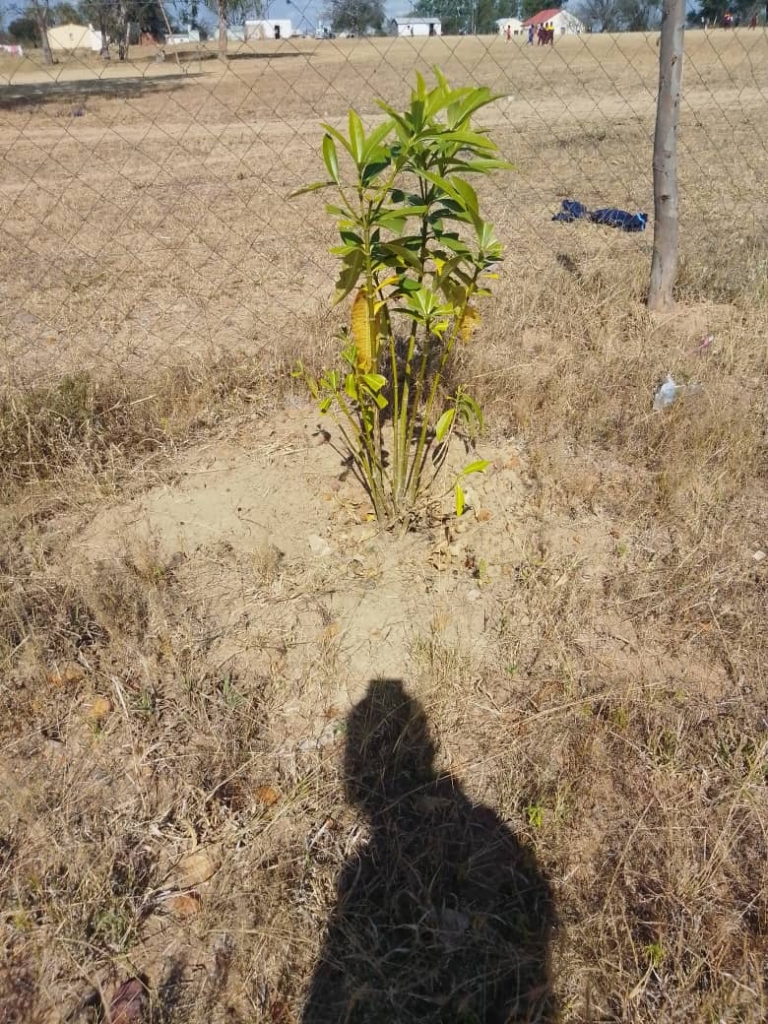
The impact extended beyond the immediate activity. Teachers became more confident in integrating climate change concepts across different learning areas. Learners began identifying other environmental issues within the school and proposing solutions. Discussions around sustainable environmental practices became more common both in classrooms and within the wider school community. Tree planting was introduced as another environmental solution to complement the gully restoration initiative. Most importantly, the initiative demonstrated that the climate education component integrated into the Teach For Zimbabwe Pre-Institute is producing tangible results. The knowledge and skills gained during training translated into meaningful action that positively affected both learners and the environment. Climate education was no longer an abstract concept; it became visible through restored landscapes, empowered learners, and a school community united around a common purpose.
This breakthrough highlights the power of equipping educators with climate literacy and practical leadership skills. Through the Teach For Zimbabwe Fellowship, I was inspired to move beyond awareness creation toward action-oriented environmental stewardship. The experience has shown that when teachers are empowered, they can mobilize entire school communities to become catalysts for environmental change. However, there were some challenges, particularly water shortages, which made it difficult to water the newly planted trees. As a result, some trees did not survive. However, many, especially drought-resistant tree species, are growing very well.
As we continue to face the realities of climate change, schools remain powerful platforms for nurturing responsible citizens who understand their role in protecting the environment. The gully-filling and tree-planting initiatives serve as evidence that climate education, when effectively integrated into teacher development programmes, can inspire practical action, strengthen community participation, and contribute to building more resilient communities.
Desline ZirimaTeach For Zimbabwe Vice President, 6th Cohort, Nyevedzanai Primary School, Chivi District
Add Comment